3 min readBlood Biomarkers
hs-CRP above 1.0: the anti-inflammatory plate, quantified
A high-sensitivity CRP above 1.0 mg/L signals low-grade inflammation that quietly raises cardiovascular risk. Here is what actually lowers it — the dietary pattern, quantified, and the habits that matter most.
Part 6 of 26This article is part of the Blood Biomarkers guidehs-CRP — high-sensitivity C-reactive protein — is the most accessible window we have into chronic, low-grade inflammation, the kind that runs silently for years and nudges up your risk of heart disease. A reading under 1.0 mg/L is low risk; 1.0 to 3.0 is average; above 3.0 is high (Ridker 2003). If yours is creeping above 1.0, it is worth understanding what actually moves it — and what does not.
First, rule out the noise
CRP spikes with any acute infection, injury or hard training session, so a single high reading during a cold or after a marathon means little. What matters is your baseline when you are well and rested. If a reading looks high, retest a few weeks later when healthy before drawing conclusions — the marker is only useful as a trend, not a one-off.
The dietary pattern that lowers it
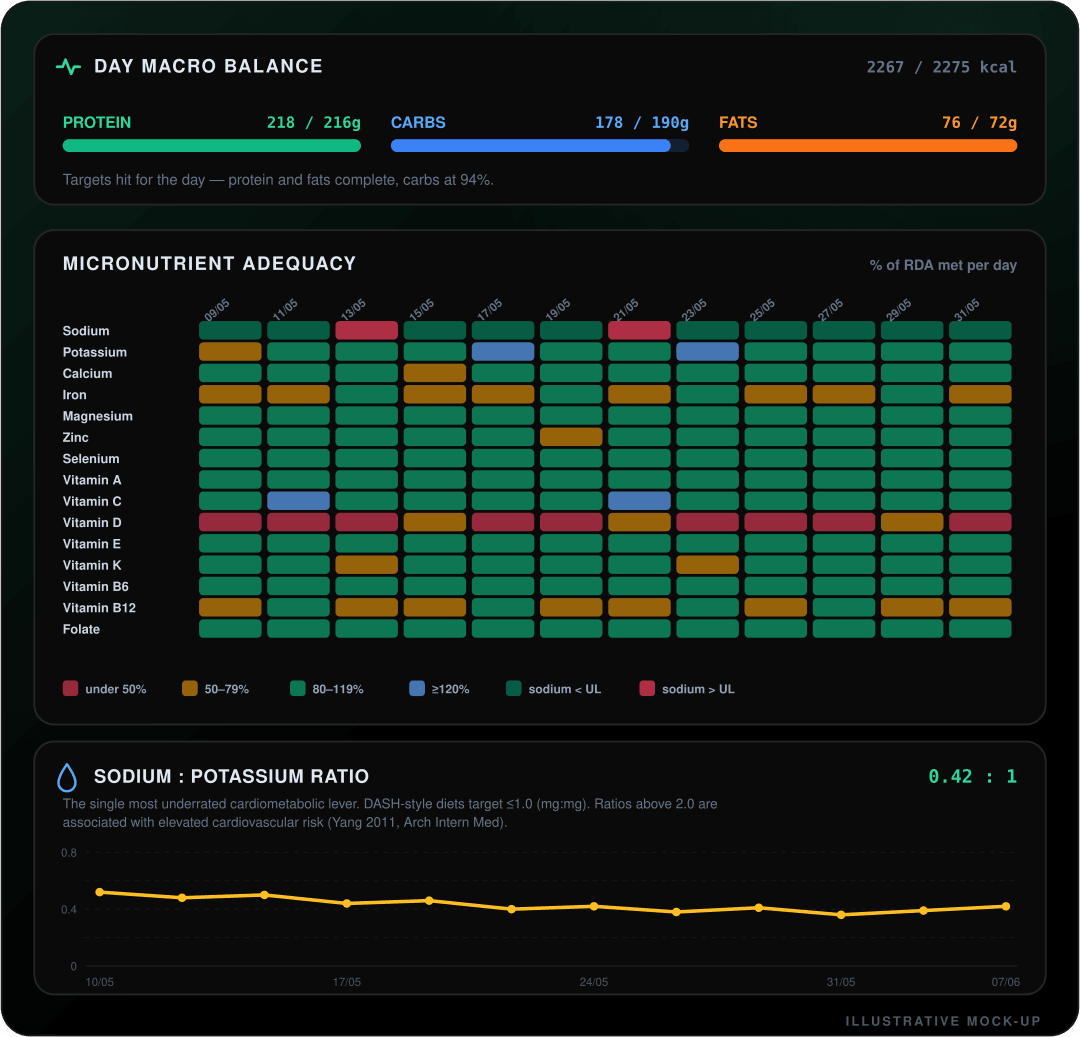
No single "anti-inflammatory superfood" does the work — it is the overall pattern. The best-evidenced one is Mediterranean-style: rich in vegetables, fruit, wholegrains, legumes, olive oil, nuts and oily fish, and low in refined carbohydrate, added sugar and processed meat. The PREDIMED trial (Estruch 2018, NEJM) linked this pattern to lower inflammatory markers and fewer cardiovascular events. Quantified, that means most of the plate is plants and wholegrains, the fat is largely from olive oil and nuts, oily fish appears two to three times a week, and sugary drinks and processed meat are the exception rather than the staple.
Fibre and omega-3 are the standout nutrients
Within that pattern, two levers have the clearest anti-inflammatory signal. High fibre intake is associated with lower CRP, partly through a healthier gut microbiome producing anti-inflammatory short-chain fatty acids. Omega-3 fatty acids from oily fish directly dampen inflammatory signalling. Hitting ~30 g of fibre a day and two to three oily-fish portions a week covers most of the food-side benefit.
The non-food levers that matter just as much
Diet is only part of the story. Excess visceral fat is itself an inflammatory organ, so losing abdominal fat lowers CRP. Regular exercise, adequate sleep and not smoking all independently reduce chronic inflammation. A high CRP alongside a large waistline is often, at root, a body-composition and lifestyle signal as much as a dietary one — which is why the fix is rarely just "eat more of one food."
How Misi quantifies the anti-inflammatory plate
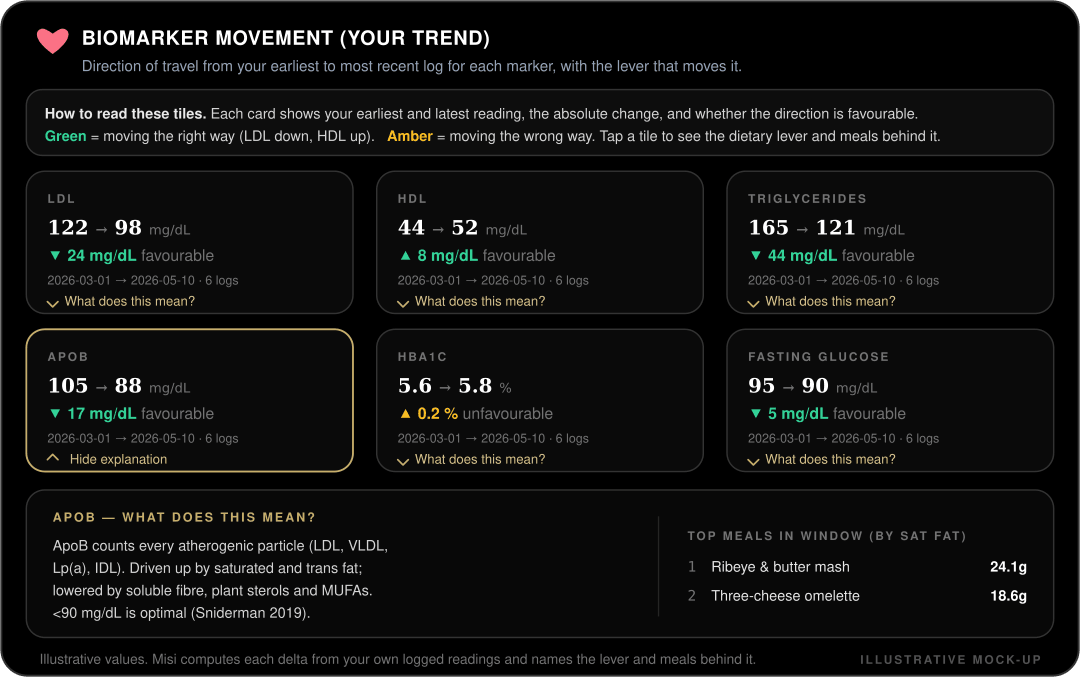
Misi reads your hs-CRP from your panel and tracks it alongside the inputs that move it: fibre and omega-3 intake, the whole-food quality of your meals, your body-composition trend and your logged habits. Instead of a vague instruction to "eat anti-inflammatory," you get concrete targets — fibre grams, fish portions, waistline trend — and a CRP trendline that tells you whether the pattern is actually working over months.
There is no anti-inflammatory superfood. There is an anti-inflammatory pattern — mostly plants, olive oil, oily fish, high fibre — plus losing the visceral fat that inflames you in the first place.
This is general educational information, not medical advice. A persistently elevated hs-CRP should be interpreted by your doctor in the context of your full cardiovascular risk — it is one input among several, not a diagnosis on its own.
Ready to put this into practice?
Misi BioLabs turns your bloods into a meal plan, training block and AI coaching — in one place.
Start freeFree tools
- PhenoAge Calculator — Biological age from a standard blood panel (Levine 2018).
- Biological Age Calculator — How fast are you really ageing? Nine blood markers answer it — no quiz.
- VO2max Calculator — Cooper 12-minute test → VO2max + fitness age + mortality hazard.