3 min readGLP-1 & Muscle Preservation
Why GLP-1 users need macro floors, not calorie ceilings
Traditional diets fight to keep calories under a ceiling. On a GLP-1 the drug already enforces the deficit — so the danger flips. The job becomes hitting nutritional floors, and that changes everything about how you should eat.
Part 2 of 12This article is part of the GLP-1 & Muscle Preservation guideEvery diet you have ever tried was built around a ceiling: eat under this many calories, resist the urge to go over, use willpower to hold the line. GLP-1 medications quietly demolish that framing. The drug enforces the deficit for you by killing appetite — so the risk is no longer eating too much. It is eating too little of the things that matter.
The problem flips when appetite disappears
When you can barely finish half a normal plate, a calorie ceiling is not just useless — it is actively the wrong tool, because it points your attention at a problem you no longer have. The real failure mode on a GLP-1 is under-eating protein, fibre and micronutrients while the total calorie count takes care of itself. Chasing an ever-lower calorie number here just accelerates muscle loss and leaves you nutritionally short.
What a floor is, and why it fits GLP-1 physiology
A floor is a minimum you must hit rather than a maximum you must not exceed. The three that matter most: protein at 1.6 to 2.2 g/kg of bodyweight to protect muscle in the deficit; fibre at roughly 25 to 38 g a day for gut health and satiety; and adequate micronutrients so that eating less does not mean eating poorly. With limited stomach space, every bite has to earn its place — which means protein-dense, nutrient-dense food first, and the low-value calories simply never make the cut.
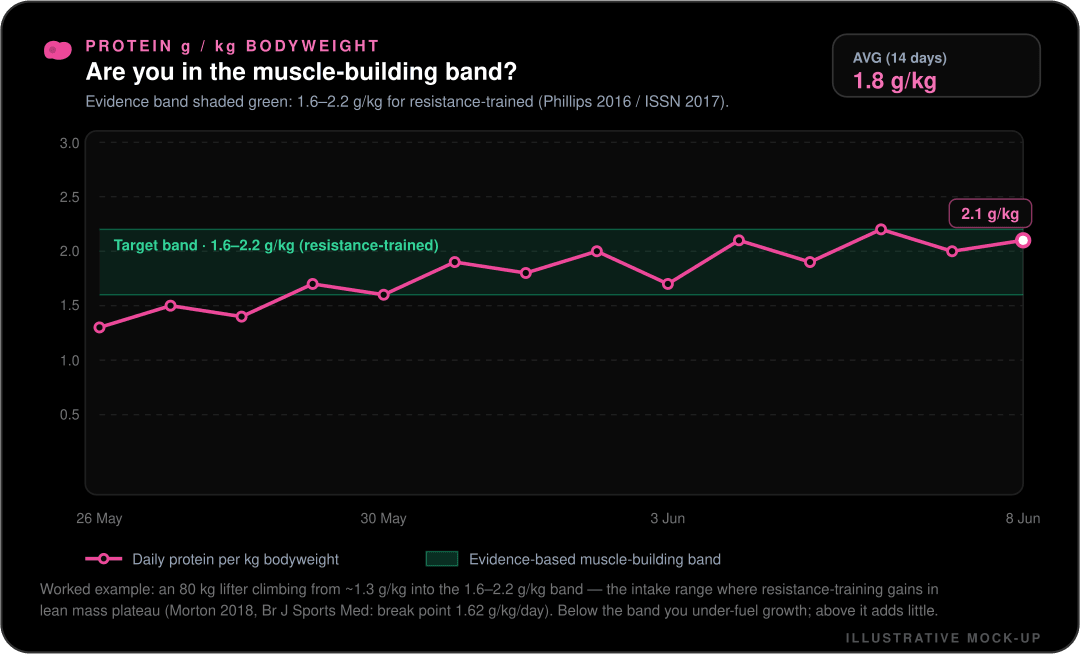
Protein-first, in smaller and more frequent meals
The practical translation is a protein-first plate: eat the protein before anything else, because it is the thing you cannot afford to leave on the plate when you fill up early. Spreading intake across smaller, more frequent meals — each clearing roughly the 2.5 g leucine threshold that triggers muscle protein synthesis — is more realistic than three big meals when appetite is blunted. The aim is to make the limited food you do eat do maximum work.
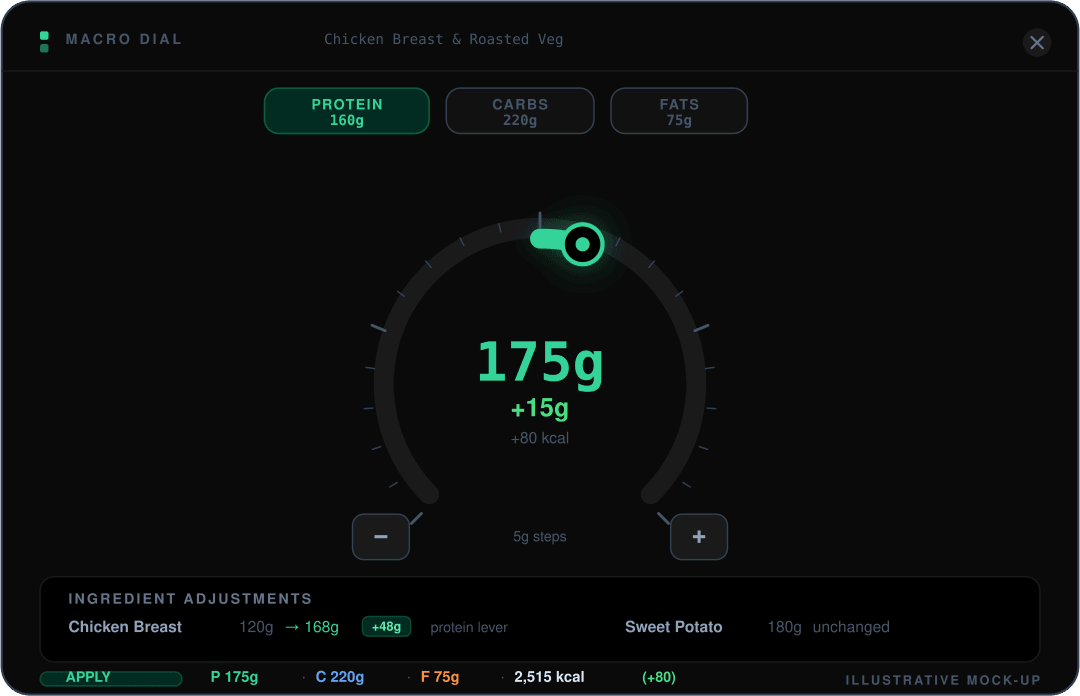
How Misi builds around floors, not ceilings
Misi sets your protein and micronutrient floors from your bodyweight, goal and GLP-1 status, then scales protein-dense meals to hit them within whatever appetite you have that day — rather than nagging you about a calorie limit the drug has already handled. It tracks protein per kilogram, fibre and key micronutrients so you can see the floors being met, and flags when appetite suppression is quietly pulling protein below the line. That is the shift GLP-1 users need: stop defending a ceiling, start defending a floor.
The drug already stops you overeating. Your job is to make sure that in eating less, you do not eat too little of the one thing keeping your muscle on — protein.
This is general information, not medical advice. GLP-1 medications should be used only under medical supervision. If appetite suppression is making it hard to meet basic nutritional needs, tell your prescriber — protein and micronutrient targets should be personalised, especially if you have kidney disease or other conditions.
Ready to put this into practice?
Misi BioLabs turns your bloods into a meal plan, training block and AI coaching — in one place.
Start freeFree tools
- PhenoAge Calculator — Biological age from a standard blood panel (Levine 2018).
- Biological Age Calculator — How fast are you really ageing? Nine blood markers answer it — no quiz.
- VO2max Calculator — Cooper 12-minute test → VO2max + fitness age + mortality hazard.