3 min readWomen's Training & Hormones
Perimenopause blood panel: the 8 markers to demand from your doctor
Perimenopause is often dismissed with a single hormone test — or none at all. Here are the eight markers worth asking for, what each one tells you, and why the trend matters more than any single reading.
Part 3 of 8This article is part of the Women's Training & Hormones guidePerimenopause can last a decade, and for most of it the standard medical response is a shrug or a single hormone test taken on the wrong day. The transition affects far more than oestrogen: it reshapes your metabolic, bone, thyroid and iron status too. If you are going to ask for blood work, these are the eight markers worth demanding — and, just as importantly, how to read them.
Why a single hormone test rarely settles it
The defining feature of perimenopause is that hormones fluctuate wildly from cycle to cycle. A single FSH or oestradiol reading can look "normal" one week and menopausal the next, which is exactly why a one-off test is so often unhelpful. Diagnosis in perimenopause is primarily clinical — based on your symptoms and cycle changes — with bloods used to build context and rule things out, not to deliver a yes/no verdict. That framing matters before you read a single number.
The hormonal markers (1–3)
FSH (follicle-stimulating hormone) rises as the ovaries become less responsive, though it swings during perimenopause, so it is suggestive rather than definitive. Oestradiol tracks the oestrogen that is driving many of your symptoms and, later, your bone and cardiovascular risk. Thyroid function (TSH, ideally with free T4) belongs here because an underactive thyroid mimics perimenopause almost exactly — fatigue, weight change, low mood, brain fog — and is far too often missed when everything is blamed on hormones.
The metabolic and cardiovascular markers (4–6)
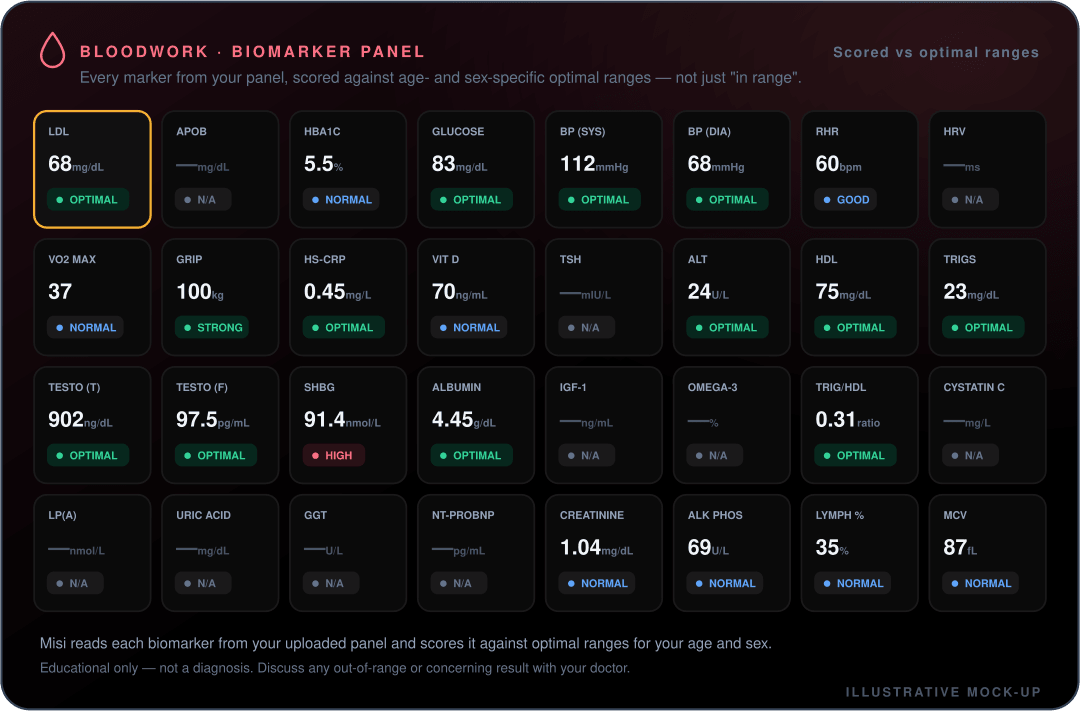
Falling oestrogen shifts fat toward the abdomen and worsens insulin sensitivity, so metabolic markers deserve attention now even if they were fine before. Ask for HbA1c (glucose control), a full lipid panel — ideally including ApoB, since cardiovascular risk climbs after menopause — and consider fasting insulin or HOMA-IR if weight is shifting to your midsection. This is the window where metabolic problems start silently, and catching the drift early is far easier than reversing it later.
The bone and iron markers (7–8)
Vitamin D underpins bone health, which becomes critical as oestrogen’s protective effect on bone fades and fracture risk begins its climb. Ferritin (iron stores) matters because heavy, erratic perimenopausal periods are a common and under-recognised cause of iron depletion — which itself causes the fatigue so easily blamed on hormones (our ferritin deep-dive explains why "iron normal" can still mean an empty tank). Together these eight give you a genuine baseline rather than a single ambiguous hormone value.
How Misi reads the panel in context
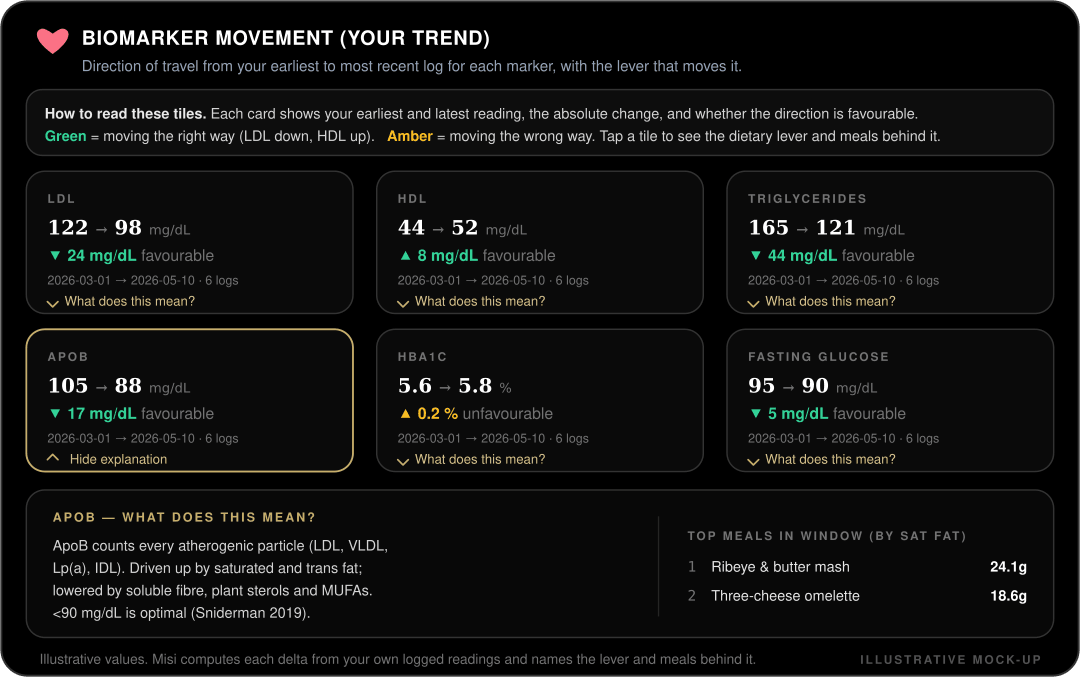
Misi parses all eight markers from your uploaded labs and tracks them over time alongside your symptoms, training and nutrition — so a swinging FSH is read against the whole picture, a creeping HbA1c is caught early, and a low ferritin is connected to the fatigue rather than dismissed. It also packages the panel into an executive report you can take to an appointment, so a rushed consultation starts from data instead of guesswork.
Perimenopause is more than one hormone. Ask for the metabolic, thyroid, bone and iron markers too — and watch the trend across tests, because a single reading in this phase tells you almost nothing.
This is general educational information, not medical advice or a diagnostic tool. Which tests are appropriate depends on your symptoms and history — discuss this list with your doctor, who can decide what to order and interpret the results in your clinical context.
Ready to put this into practice?
Misi BioLabs turns your bloods into a meal plan, training block and AI coaching — in one place.
Start freeFree tools
- PhenoAge Calculator — Biological age from a standard blood panel (Levine 2018).
- Biological Age Calculator — How fast are you really ageing? Nine blood markers answer it — no quiz.
- VO2max Calculator — Cooper 12-minute test → VO2max + fitness age + mortality hazard.