3 min readBlood Biomarkers
HbA1c is 5.7–6.0? The exact dietary changes that move it (and how fast)
An HbA1c in the 5.7–6.0% band is prediabetes — a warning, not a sentence. Here are the dietary changes with the strongest evidence for lowering it, how quickly they show up, and how Misi tracks the shift.
Part 4 of 26This article is part of the Blood Biomarkers guideYou open your results and there it is: HbA1c 5.8%. Not diabetic, but no longer "normal" either — you have landed in the prediabetes band (5.7 to 6.4%), and the letter probably said little more than "come back in a year." That year is exactly the window in which the number is most movable. Prediabetes is a warning shot, and the diet changes that answer it are well established.
What HbA1c actually measures — and why it lags
HbA1c reflects the percentage of your haemoglobin that has become glycated — coated in glucose — over the roughly three-month lifespan of a red blood cell. That means it is a moving average of your blood sugar over the previous eight to twelve weeks, not a snapshot. The practical consequence is important: changes you make today do not show up tomorrow. Give it 6 to 12 weeks before a retest, because the marker literally cannot move faster than your red cells turn over.
The changes with the strongest evidence
Four levers do most of the work. First, cut refined carbohydrate and sugar-sweetened drinks — the fastest-spiking inputs — and shift toward higher-fibre, lower-glycaemic carbohydrates. Second, raise total fibre toward 30 g a day; the Reynolds meta-analyses (2019, Lancet) tie higher fibre to meaningfully lower HbA1c and diabetes risk. Third, lose modest weight if you carry excess: the Diabetes Prevention Program (2002, NEJM) showed that lifestyle change producing ~7% weight loss cut progression to type 2 diabetes by 58% — more than metformin. Fourth, move after meals; even a 10-15 minute walk blunts the post-meal glucose rise that feeds HbA1c.
How much can you expect to move it?
Realistic, not miraculous: sustained dietary change plus modest weight loss commonly brings a 5.7 to 6.0% HbA1c back under 5.7% over three to six months. The people who succeed are rarely the ones who overhaul everything for two weeks and quit — they are the ones who hold a few changes steady long enough for the marker’s slow average to catch up. Consistency beats intensity here precisely because the measurement is an average.
How Misi turns the warning into a plan
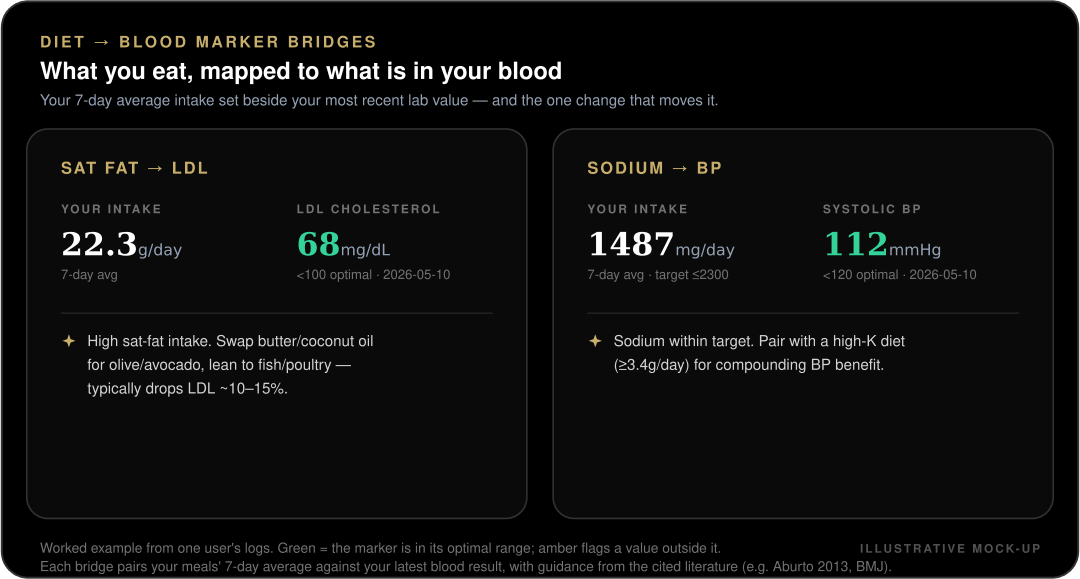
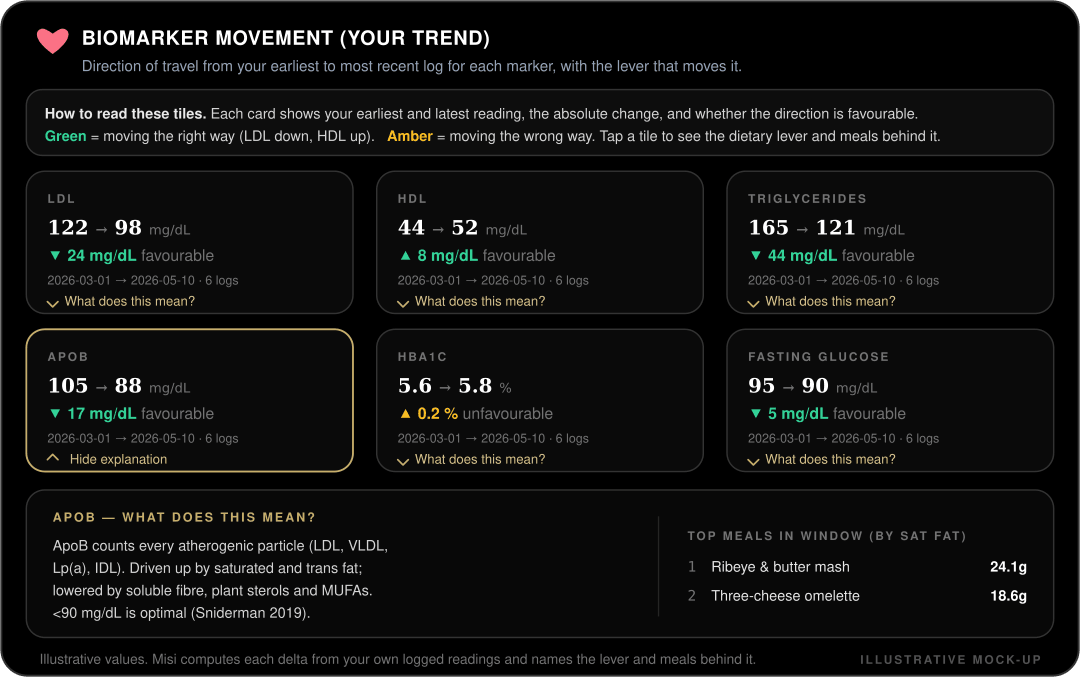
Misi reads your HbA1c from your uploaded panel, then builds the bridge to the food that drives it: it flags refined-carbohydrate load, tracks fibre against the 30 g target, and scales lower-glycaemic, whole-food meals to fit your day. It tracks weight and body composition alongside, and shows the HbA1c trend over successive tests so you can see the average bending the right way — turning a once-a-year "come back later" into a plan you can actually steer.
Prediabetes is the most reversible point on the whole diabetes timeline. The HbA1c that flagged it is also the number that will show you winning — just give it a few months to catch up.
This is general educational information, not medical advice or a diagnostic tool. An HbA1c in the prediabetes range should be discussed with your doctor, who can confirm the result, screen for other risk factors and decide whether medication is warranted alongside diet and lifestyle change.
Ready to put this into practice?
Misi BioLabs turns your bloods into a meal plan, training block and AI coaching — in one place.
Start freeFree tools
- PhenoAge Calculator — Biological age from a standard blood panel (Levine 2018).
- Biological Age Calculator — How fast are you really ageing? Nine blood markers answer it — no quiz.
- VO2max Calculator — Cooper 12-minute test → VO2max + fitness age + mortality hazard.