3 min readProtein & Muscle
On a GLP-1? The muscle you must not lose
Semaglutide and tirzepatide strip weight fast — but a large share of it can be muscle, not just fat. Here is the protein-and-training protocol that protects lean mass, and how Misi tracks it.
Part 4 of 10This article is part of the Protein & Muscle guideGLP-1 medications like semaglutide (Ozempic, Wegovy) and tirzepatide (Mounjaro, Zepbound) are the biggest story in weight management in a generation, and for good reason: the weight loss is real and substantial. But there is a catch that rarely makes the headlines. When you lose weight quickly, a meaningful share of what disappears is not fat — it is skeletal muscle. Protecting that muscle is the difference between getting smaller and getting healthier.
How much of the loss is muscle?
In the STEP 1 trial of semaglutide (Wilding 2021, New England Journal of Medicine), participants lost about 15% of their body weight — a landmark result. But body-composition substudies of GLP-1 weight loss consistently show that roughly 25 to 40% of the total weight lost comes from lean mass, not fat. That is broadly what you would expect from any rapid weight loss, but it matters more here because the appetite suppression is so effective that protein intake and training often fall away at exactly the moment they are needed most.
Why losing muscle on a GLP-1 is a problem
Muscle is your metabolic engine, your glucose sink and your insurance against frailty. Lose too much of it and your resting metabolic rate drops, which makes weight regain easier if you ever come off the drug. In older users the risk is sharper still: layering drug-induced muscle loss on top of age-related sarcopenia can accelerate the slide toward frailty. The goal of treatment should be fat loss with muscle preserved — not weight loss at any cost.
Protein is the first line of defence
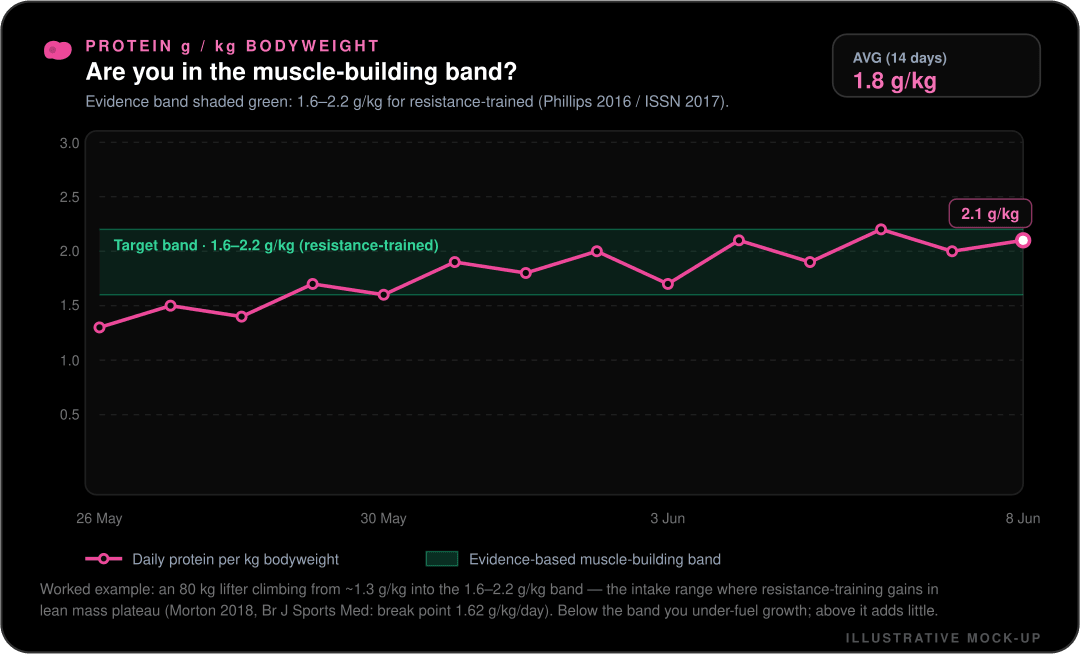
The single most important countermeasure is keeping protein high even as total appetite falls. In a calorie deficit the body breaks down more protein for fuel, so requirements actually rise: research in dieting trainees supports intakes toward the upper end of the range — around 1.6 to 2.2 g/kg of bodyweight per day, and higher still for leaner individuals (Helms 2014). Longland and colleagues (2016) showed that a high-protein diet combined with resistance training during an aggressive deficit let participants gain muscle while losing fat. On a GLP-1, where you are simply eating less, hitting that protein floor takes deliberate planning.
Resistance training is the other half
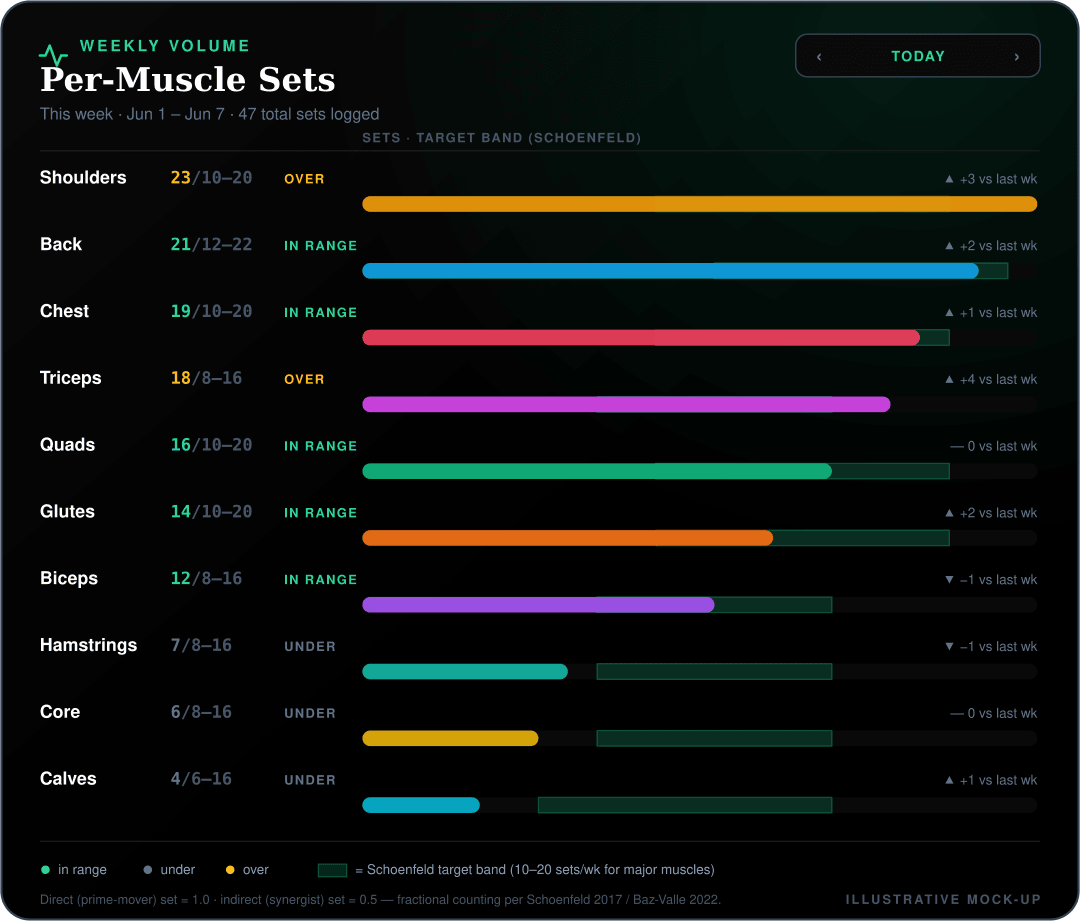
Protein gives the muscle its raw material; resistance training gives it a reason to stay. Lifting signals the body to hold onto lean tissue during weight loss, and without that stimulus even adequate protein cannot fully prevent muscle loss. Misi counts your weekly hard sets per muscle against evidence-based volume bands, so you can see at a glance whether every major muscle is getting enough work to defend it through the deficit.
How the app pulls it together
Because Misi tracks protein per kilogram, weekly training volume and body composition in one place, it can show whether your weight loss is the right kind. The AI body scan estimates fat versus lean trend, the strength analytics confirm you are holding performance, and the protein chart keeps the foundation in place. Together they turn "the scale is going down" into the more useful "I am losing fat and keeping muscle."
The scale dropping is not the goal. Losing fat while keeping the muscle that keeps you strong and metabolically healthy — that is the goal.
This is general information, not medical advice. GLP-1 medications should only be used under medical supervision — never adjust or stop a prescribed medication based on an article. Talk to your prescriber about protein and resistance training as part of your plan, particularly if you have kidney disease or other conditions.
Ready to put this into practice?
Misi BioLabs turns your bloods into a meal plan, training block and AI coaching — in one place.
Start freeFree tools
- PhenoAge Calculator — Biological age from a standard blood panel (Levine 2018).
- Biological Age Calculator — How fast are you really ageing? Nine blood markers answer it — no quiz.
- VO2max Calculator — Cooper 12-minute test → VO2max + fitness age + mortality hazard.