2 min readTraining & Programming
Zone 2 vs intervals — the two speeds that build an aerobic engine
Zone 2 and high-intensity intervals are not rivals — they build different parts of the same engine. Here is what each does, how much you need, and how Misi targets both.
Part 25 of 38This article is part of the Training & Programming guideFew training ideas have spread as fast as "Zone 2." It is genuinely useful — but it is also widely misunderstood, often confused with simply going easy, or treated as a replacement for hard intervals. The truth is that Zone 2 and high-intensity work build different, complementary parts of your aerobic engine, and a good plan uses both.
What Zone 2 actually is
Zone 2 is a specific intensity: roughly the hardest you can go while still clearing lactate as fast as you produce it — practically, an effort where you can hold a conversation in full sentences but would rather not. Physiologically it sits at or just below your first lactate threshold (around 2 mmol/L). Training here, as San Millan and Brooks (2018) describe, is a powerful stimulus for mitochondrial density and fat oxidation — it builds the size and efficiency of your aerobic base.
What intervals add that Zone 2 cannot
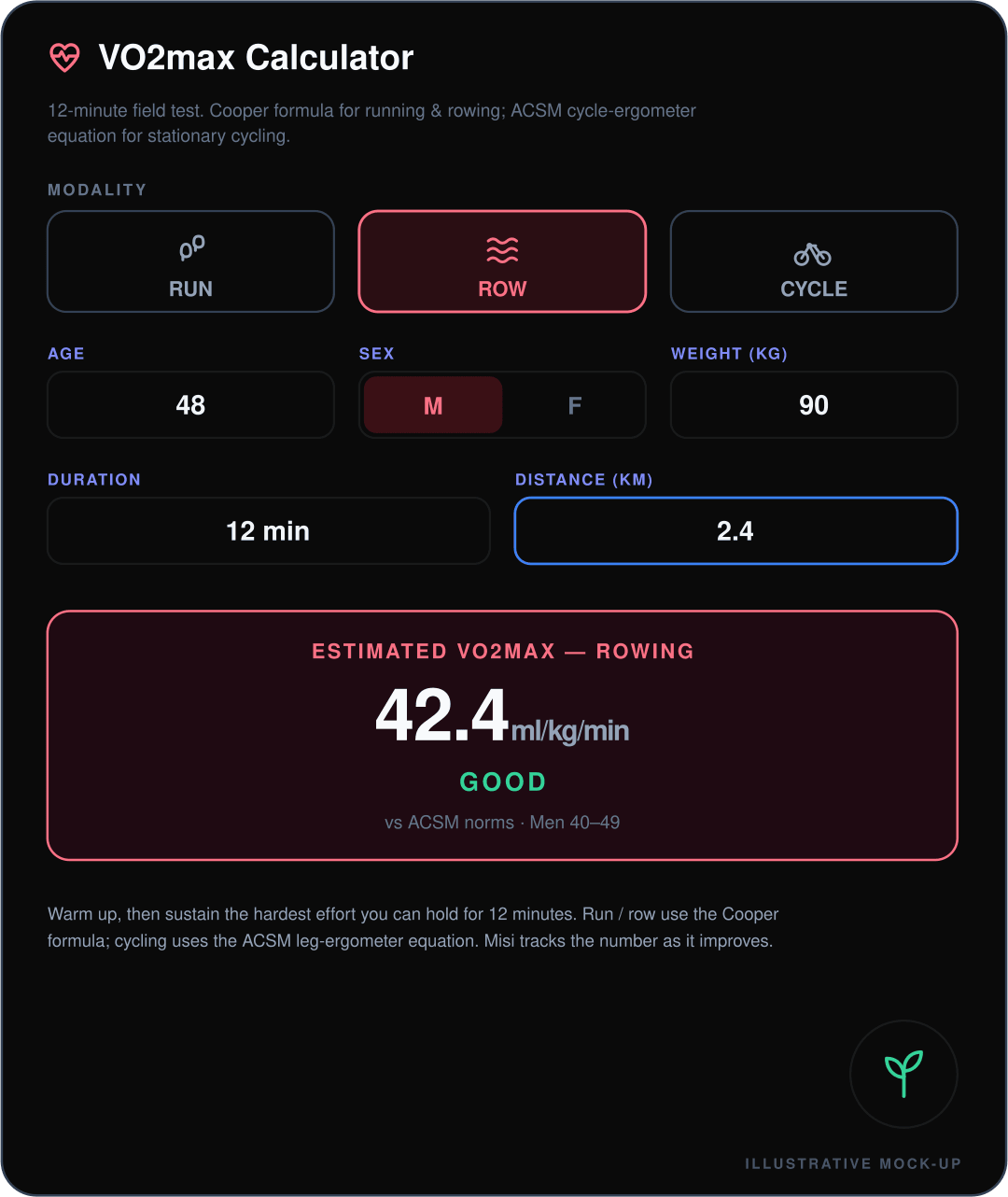
Zone 2 builds the base, but it does little for the very top of your aerobic ceiling. To raise VO2max — the single best lab measure of cardiorespiratory fitness — you need time spent near your maximum. Classic protocols like the Norwegian 4x4 (four four-minute efforts at near-max heart rate, with recovery between) are highly effective at pushing peak oxygen uptake up (Helgerud 2007). This matters because VO2max is one of the strongest predictors of all-cause mortality we have.
The 80/20 split most people get wrong
Endurance research, much of it summarised by Stephen Seiler, points to a polarised distribution: roughly 80% of training time at easy Zone 2 intensity and about 20% hard. Most recreational exercisers invert the useful part of this — they spend their "easy" days too hard and their hard days not hard enough, ending up in a grey middle zone that builds neither base nor ceiling efficiently. Going genuinely easy most of the time is what makes the hard sessions productive.
How Misi targets both speeds
Misi’s cardio and HIIT engines structure work and rest with heart-rate and pace targets, so a Zone 2 session keeps you in the right band instead of drifting too hard, and an interval session pushes you near the top where VO2max actually responds. The app then tracks your VO2max and fitness age over time, so you can watch the base and the ceiling both move.
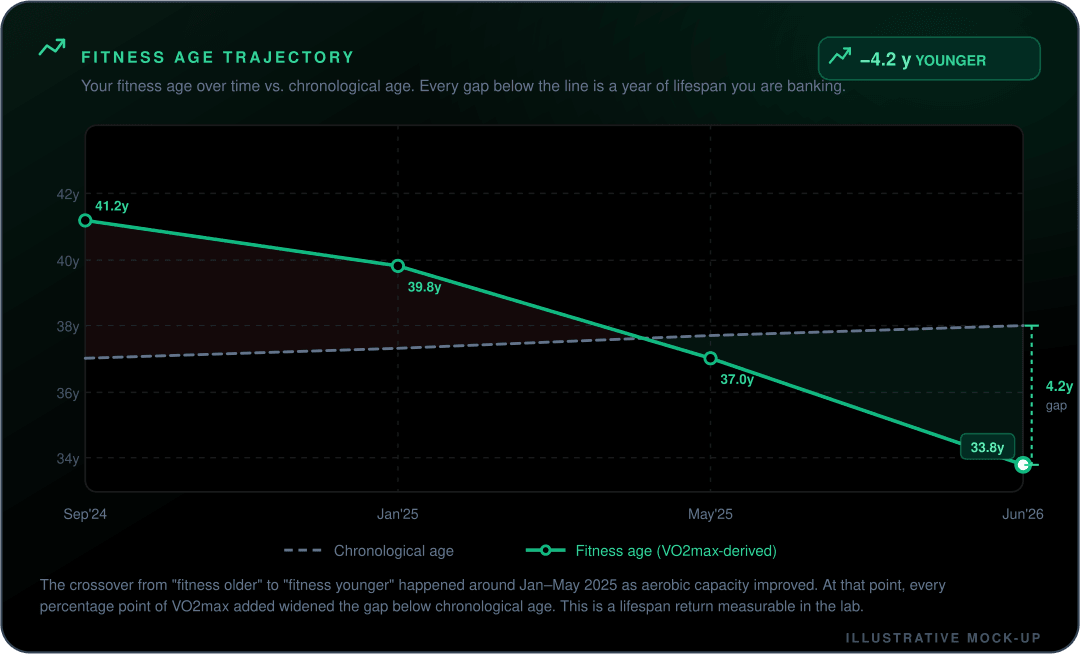
Zone 2 builds the size of your engine. Intervals raise its red line. You want both — and most people accidentally train neither.
This is general fitness information, not medical advice. Anyone new to exercise, returning after a layoff, or with a heart or respiratory condition should get clearance from a clinician before starting high-intensity intervals.
Ready to put this into practice?
Misi BioLabs turns your bloods into a meal plan, training block and AI coaching — in one place.
Start freeFree tools
- PhenoAge Calculator — Biological age from a standard blood panel (Levine 2018).
- Biological Age Calculator — How fast are you really ageing? Nine blood markers answer it — no quiz.
- VO2max Calculator — Cooper 12-minute test → VO2max + fitness age + mortality hazard.