2 min readDaily Habits & Protocol Stacks
The 30-plants question — fibre, diversity and what your week is missing
Most people eat barely half the fibre they need, and far fewer different plants than their gut would like. Here is the evidence behind the targets — and how Misi shows the gap.
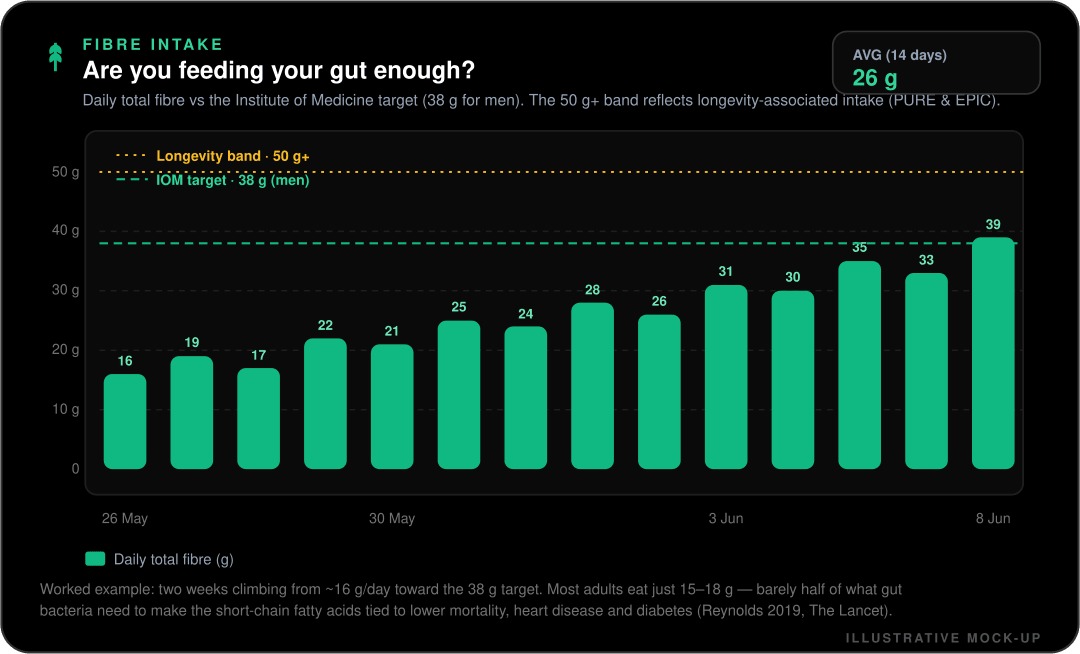
Part 9 of 23This article is part of the Daily Habits & Protocol Stacks guideTwo numbers have quietly become the headline of modern nutrition science: about 30 grams of fibre a day, and around 30 different plants a week. Most people in Western countries hit neither — average fibre intake sits closer to 15 to 18 grams, and plant variety is often a fraction of the target. The gap matters more than almost anything else on your plate.
Fibre is the dose-response nutrient
A landmark series of meta-analyses by Reynolds and colleagues (2019, The Lancet) pooled decades of data and found a clear dose-response relationship: people eating the most fibre, around 25 to 29 grams a day or more, had significantly lower rates of all-cause mortality, heart disease, stroke, type 2 diabetes and colorectal cancer than those eating the least. Few single dietary changes have evidence this broad and this consistent — and most people are starting from well below the threshold.
Why diversity, not just quantity
Your gut microbiome is an ecosystem, and different microbes feed on different plant fibres. The American Gut Project (McDonald 2018) found that people who ate more than 30 different plant types a week had measurably more diverse microbiomes than those eating 10 or fewer — and microbial diversity is associated with better metabolic and immune health. "Plants" here is generous: vegetables, fruits, wholegrains, legumes, nuts, seeds, herbs and spices all count. It is variety, not volume, that feeds the ecosystem.
What the fibre actually does
When gut bacteria ferment these fibres they produce short-chain fatty acids such as butyrate, which nourish the cells lining your colon, help regulate inflammation and support the gut barrier. This is the mechanism beneath the epidemiology: a diverse, well-fed microbiome is not a wellness slogan but a metabolically active organ doing real work for you — provided you give it the raw material.
How Misi closes the gap
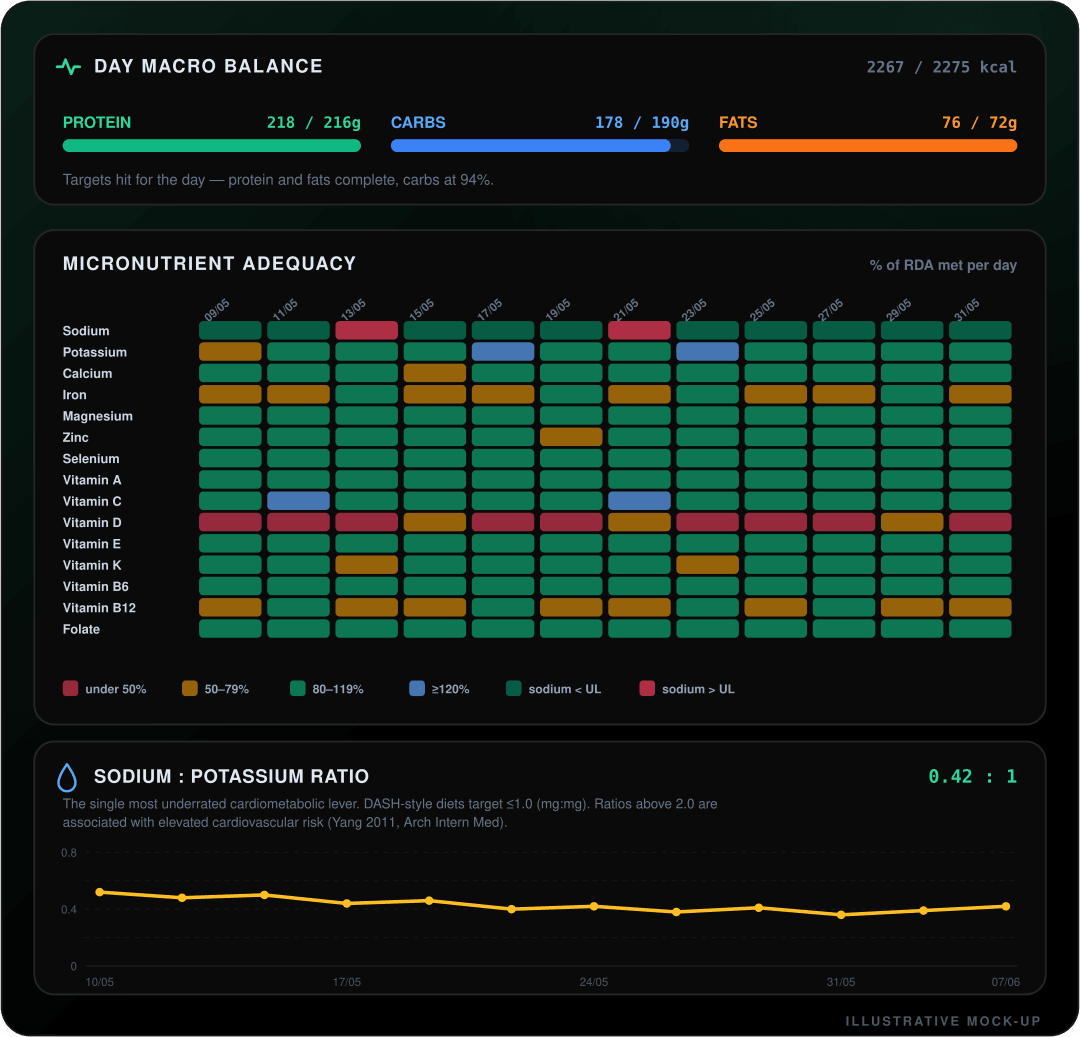
Most apps track calories and the big three macros and stop there, which is exactly why fibre and plant variety slip through unnoticed. Misi tracks fibre and micronutrients explicitly, and because your meals come from a curated, whole-food database, plant diversity is built into the plan rather than left to chance. The custom meal builder, drawing on a 2,300-plus ingredient database, makes it easy to add the beans, seeds or extra vegetables that push you toward both targets.
You do not have to count to 30 plants in your head. You do have to eat them — and the simplest first step is making fibre a number you actually see.
This is general nutrition information, not medical advice. If you have a gut condition such as IBS or IBD, increase fibre gradually and speak to a clinician or dietitian — some people need a tailored approach such as a low-FODMAP plan.
Ready to put this into practice?
Misi BioLabs turns your bloods into a meal plan, training block and AI coaching — in one place.
Start freeFree tools
- PhenoAge Calculator — Biological age from a standard blood panel (Levine 2018).
- Biological Age Calculator — How fast are you really ageing? Nine blood markers answer it — no quiz.
- VO2max Calculator — Cooper 12-minute test → VO2max + fitness age + mortality hazard.