3 min readGLP-1 & Muscle Preservation
Coming off Ozempic: the rebound-proofing plan
Stop a GLP-1 without a plan and most of the weight comes back — a large trial saw two-thirds return within a year. Here is what actually protects your results when you taper off, and how Misi holds the line.
Part 3 of 12This article is part of the GLP-1 & Muscle Preservation guideThe uncomfortable truth about GLP-1 medications is that they treat the symptom, not the underlying appetite drive. When you stop, that drive returns — and unless something has changed in the meantime, so does the weight. Planning your exit is at least as important as planning your start, yet it is the part almost nobody talks about until the prescription runs out.
What the data actually shows about stopping
The STEP 4 trial (Rubino 2021, JAMA) is the clearest picture we have. Participants who stopped semaglutide after the initial phase regained roughly two-thirds of the weight they had lost within a year, and much of the cardiometabolic improvement reversed with it. This is not a willpower failure — it is physiology. Appetite hormones rebound, the deficit that the drug quietly enforced disappears, and portions creep back up without you consciously deciding to eat more.
Why the regain is worse than the loss
Here is the part that matters most for long-term health: the weight you lost was partly muscle, but the weight you regain is almost entirely fat. If you did not defend lean mass on the way down (see our GLP-1 muscle-preservation guide) and you regain without resistance training on the way back up, you can end up at the same scale weight with a worse body composition — less muscle, more fat, a lower resting metabolic rate. That is the trap rebound-proofing is designed to avoid.
Taper, don’t stop dead
Work with your prescriber on a gradual dose reduction rather than an abrupt stop. A slower taper gives appetite time to return in stages instead of all at once, which makes it far easier to keep portions and protein under conscious control. The goal of the taper period is to rehearse maintenance eating while you still have some pharmacological help — so that when the help is gone, the habits are already in place.
Lock in the three habits that carry the result
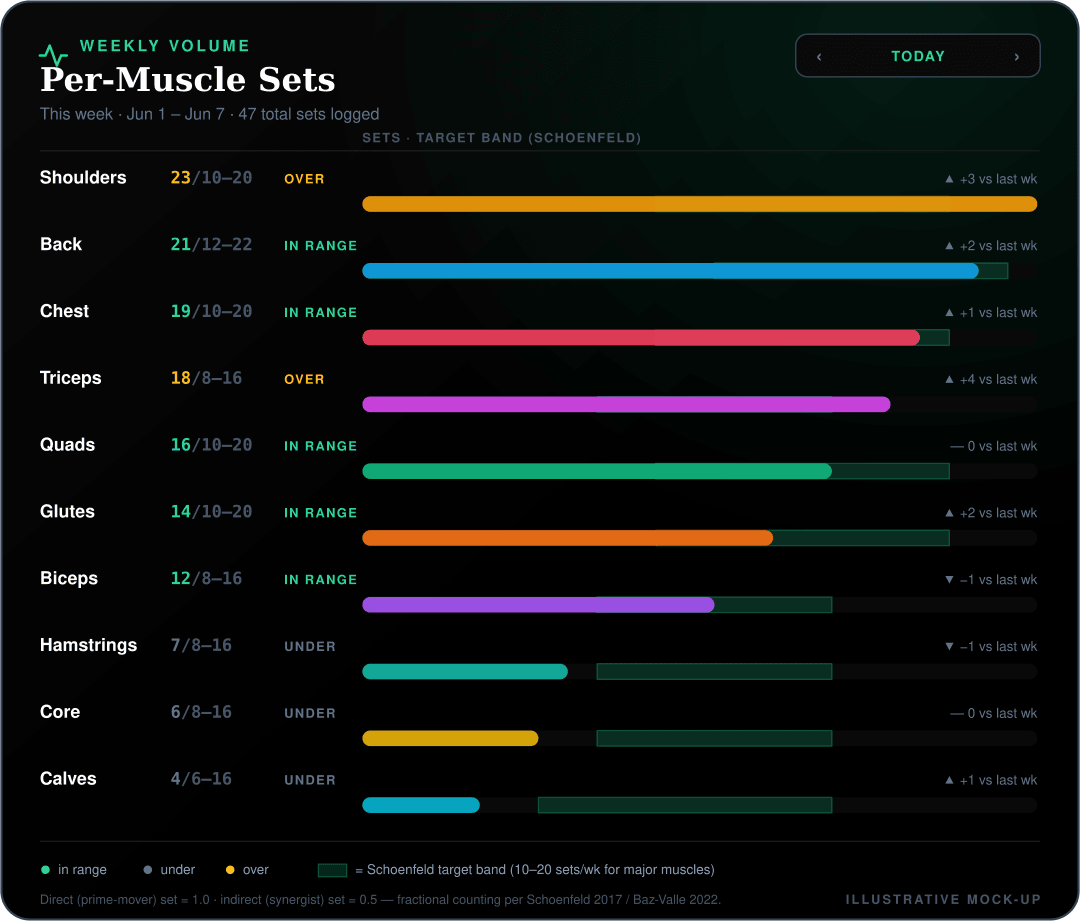
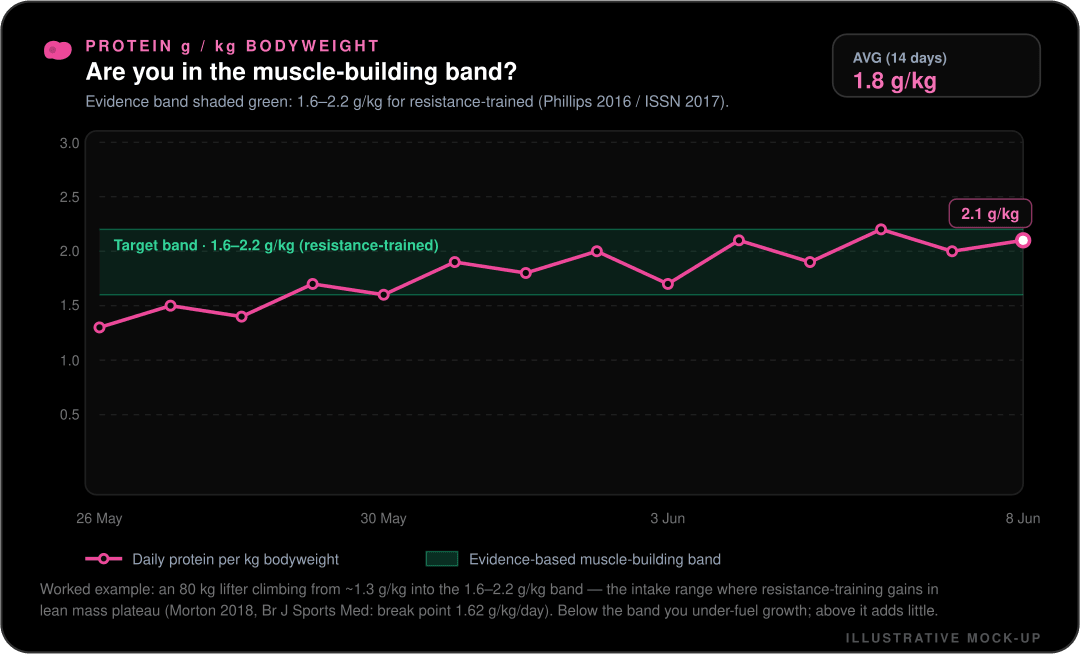
Three things do the heavy lifting after the medication stops. First, keep protein high — 1.6 to 2.2 g/kg of bodyweight — because it is the most satiating macronutrient and it protects the muscle that keeps your metabolism up. Second, keep resistance training two to four times a week; it is the signal that tells your body to hold onto lean mass rather than shed it. Third, keep tracking, because the early weeks off the drug are when regain starts silently and a rising trend caught at 2 kg is trivial to correct where 10 kg is not.
How Misi holds the line after the drug
Misi is built for exactly this transition. As appetite returns it keeps your protein floor and macro targets in view rather than letting intake drift, holds your weekly training volume accountable so lifting does not lapse, and watches your weight and body-composition trend so the first signs of regain surface as an early nudge, not a shock on the scale months later. Coming off a GLP-1 does not have to mean coming off the results — but it does require a plan, and this is one.
Starting a GLP-1 is a medical decision. Keeping the results after you stop is a training-and-nutrition decision — and that is the one you control.
This is general information, not medical advice. Never start, change or stop a GLP-1 medication without your prescriber’s guidance — dose changes should always be medically supervised. Discuss any taper plan and your nutrition and training strategy with a qualified clinician.
Ready to put this into practice?
Misi BioLabs turns your bloods into a meal plan, training block and AI coaching — in one place.
Start freeFree tools
- PhenoAge Calculator — Biological age from a standard blood panel (Levine 2018).
- Biological Age Calculator — How fast are you really ageing? Nine blood markers answer it — no quiz.
- VO2max Calculator — Cooper 12-minute test → VO2max + fitness age + mortality hazard.